
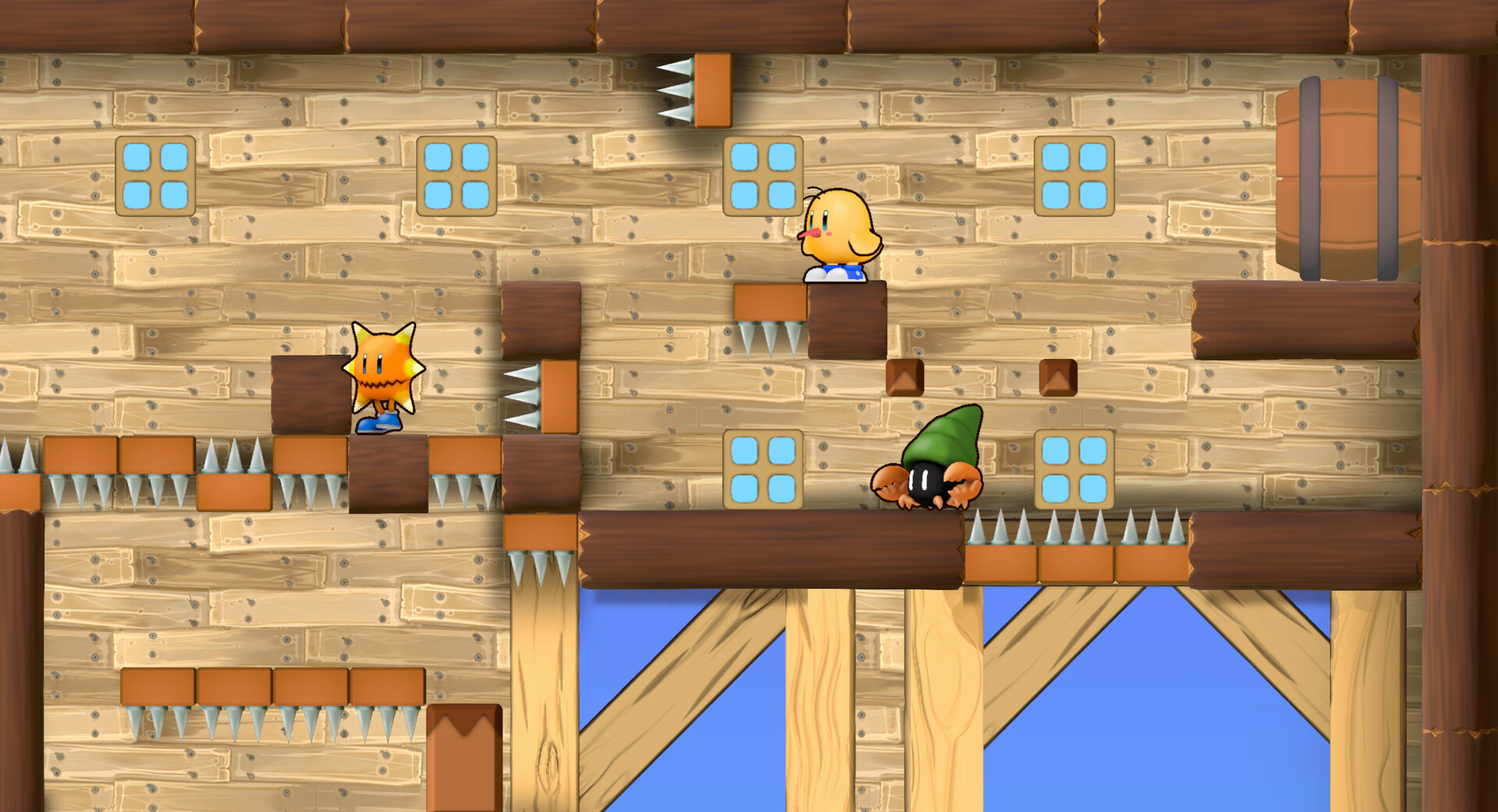

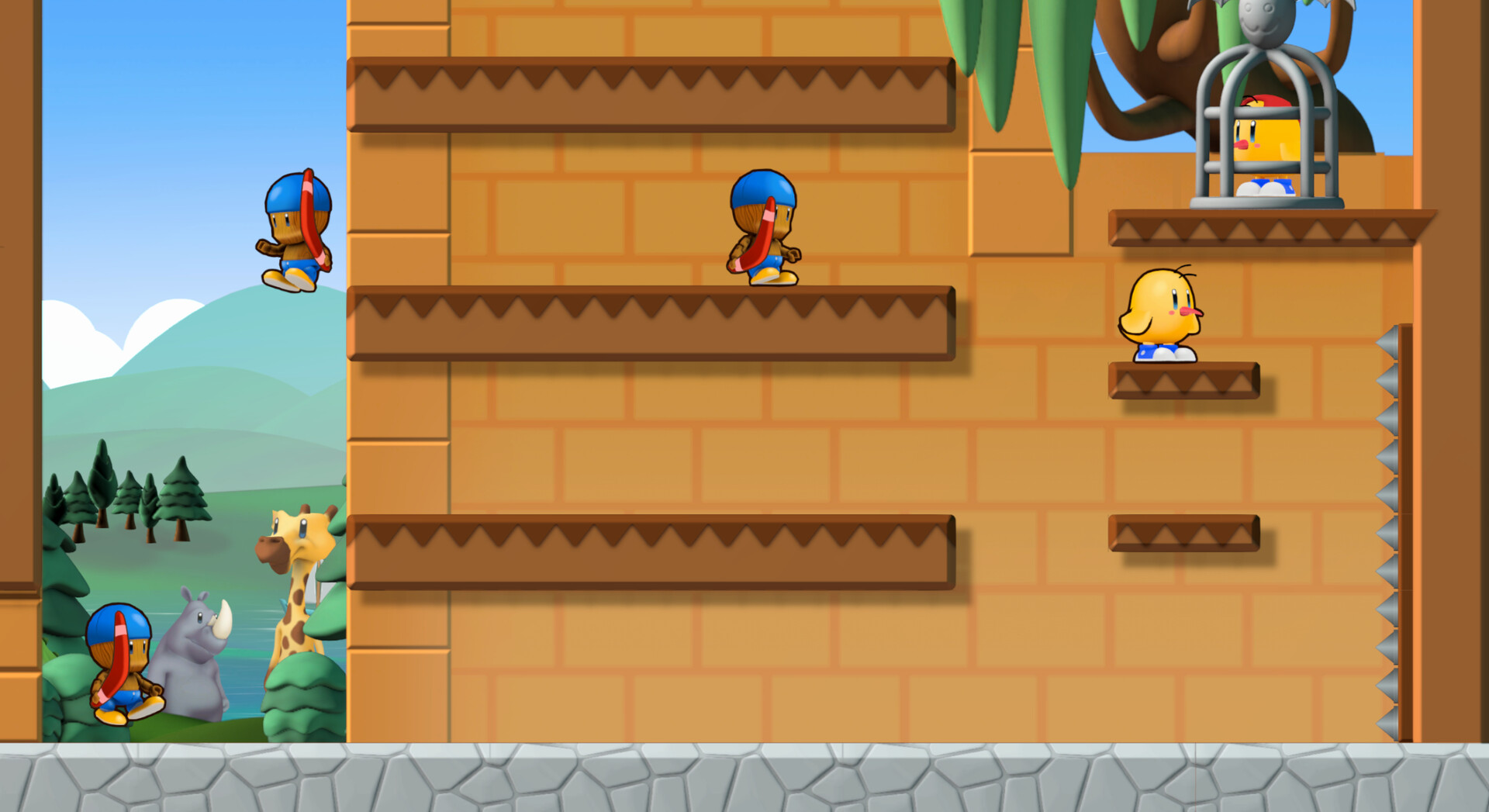
A remake of the legendary 1988 TAITO classic, THE NEWZEALAND STORY: Untold Adventure, is currently in development by Commodore Industries. Slated for release in February 2026, this official remake aims to modernize the iconic 2D platformer with updated art direction and smooth mechanics while staying true to the original spirit. You will once again play as Tiki, the brave kiwi, as he navigates vibrant levels to rescue Phee-Phee and his friends from the Walrus. The game will feature classic and brand-new enemies, flying vehicles, and the signature variety of weapons that defined the original experience.
A Factual History of The New Zealand Story
The original The New Zealand Story was released by TAITO in 1988 and quickly became a staple of the “cute-em-up” platforming genre. Set across various locations in New Zealand, such as Auckland, Rotorua, and Christchurch, the game stood out for its bright, colourful graphics and a deceptive level of difficulty.
Gameplay Mechanics
- The Hero: You control Tiki, a flightless kiwi bird armed with arrows. Unlike many platformers of the era, the gameplay is non-linear; levels are large mazes where you must find and rescue a captured friend to progress.
- Aerial Combat: A defining feature is the ability to steal vehicles from enemies. Tiki can hijack balloons, mechanical ducks, and even UFO-style craft to navigate the vertical environments.
- Weaponry: While Tiki starts with a simple bow, he can pick up powerful upgrades like bombs (high damage but short range) and a high-speed laser that can melt through bosses.
- Hidden Depths: The game is famous for its secrets, including warps that allow you to skip large portions of levels and a unique “Heaven” bonus stage. If Tiki dies under specific circumstances, he ascends to a special afterlife level where he has a chance to earn an extra life and return to the game.
Home Conversions and Legacy
Following its arcade success, the game was ported to nearly every major home system of the late 80s and early 90s:
- Computers: The Commodore Amiga and Atari ST versions are highly regarded for their faithful recreation of the arcade’s music and visuals. It also appeared on the Commodore 64, ZX Spectrum, and Amstrad CPC.
- Consoles: Major releases included the NES, Sega Master System, and Mega Drive (Genesis). A particularly strong port was released for the PC Engine (TurboGrafx-16).
- Modern Accessibility: Today, the game remains a favorite for retro enthusiasts. It has seen a resurgence on FPGA platforms like the MiSTer and Analogue Pocket via cores that provide cycle-accurate arcade performance. It is also available on modern consoles through the Arcade Archives series.
The game is remembered not just for its challenge, but for its “feel-good” aesthetic—a bright, cheerful world that masked a rigorous arcade challenge that continues to be celebrated by fans decades later.
Check out the games Steam page here.
Those 3 screenshots, that just looks way too clean for my taste.
To each their own opinion if they like the look of that….
Yeah, that screams early iOS port to me. It’s the remake version of an eagle2x filter and comic sans. I thought people stopped doing this a while ago.